
Meta is letting outside AIs read your ad data.
Time to take a position.
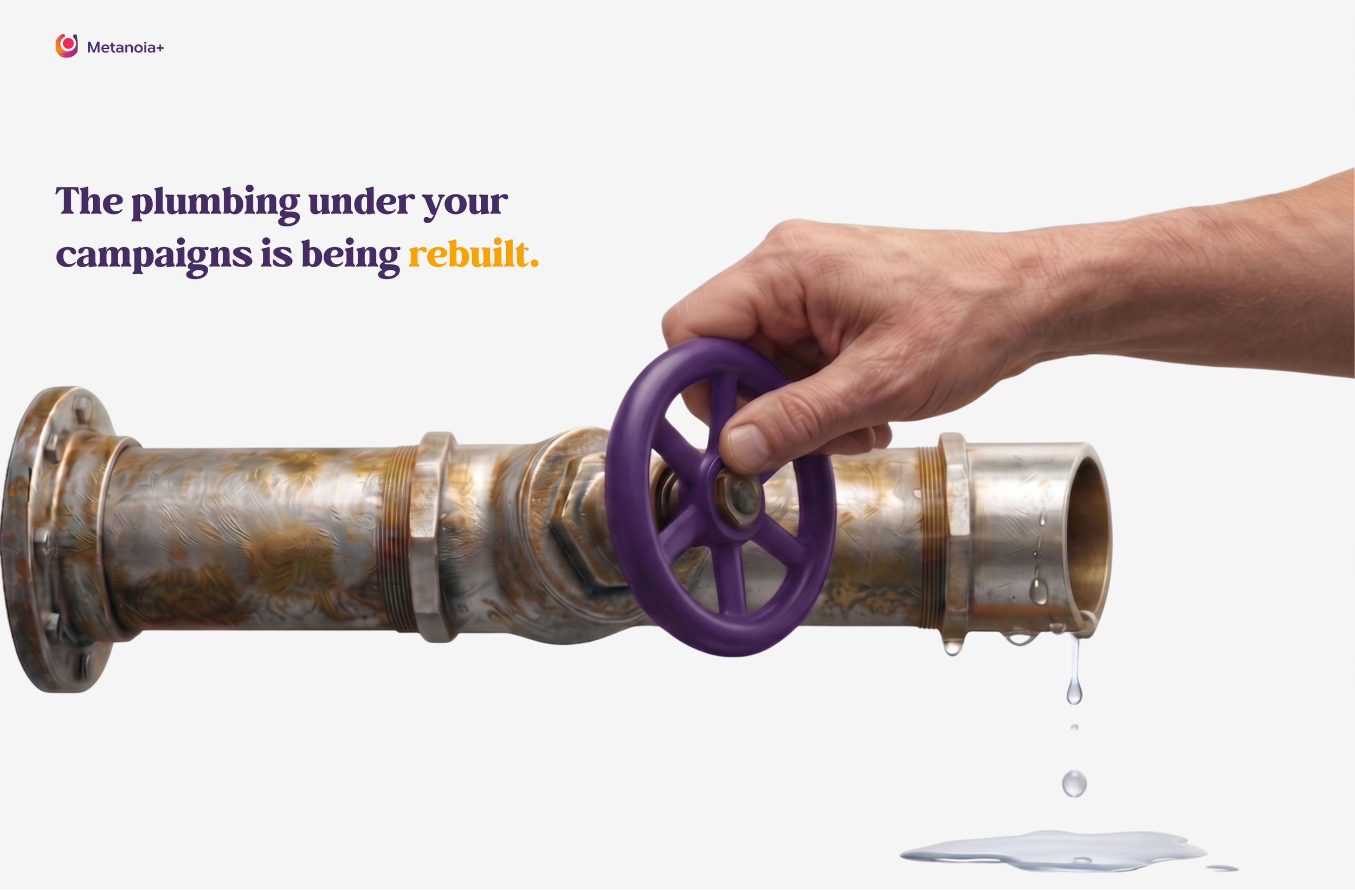
The plumbing between your platforms, your ads, and AI is being rebuilt this month. Every change pushes a decision that did not exist last week onto your team.
Lead story

This is about your ad operations and your brand governance.
Meta announced this week that it will open up its ad system to outside AI assistants. The new connectors let third-party tools like Claude or ChatGPT plug directly into Meta's ad data without needing a developer setup or API credentials. Anyone authorised on your Meta account can connect.
The pitch is convenience. Your team or your agency can now ask their preferred AI assistant about ad performance, audience signals, and budget pacing without touching the Meta interface. The trade is access. Your campaign data, your audience profiles, and your spend patterns become readable by tools you do not control and may not have approved.
The question for your team this month is simple. Who in your organisation can authorise an outside AI to read your ad data, and where does that authorisation get logged? In most marketing teams, the honest answer right now is 'nobody knows'. That is fine until something goes wrong. Once it does, the brand owns the consequences regardless of who clicked the connect button.
What to watch for next: how the other major platforms respond. If LinkedIn, TikTok, and Google match Meta's openness, the era of the closed ad interface is over. If they hold the line, expect a scramble for parity in the next quarter.
The stack

This is about your content team.
Instagram changed its algorithm this week. The platform will no longer recommend photos or carousels from accounts that mostly repost or aggregate other people's work. The signal it now rewards is original creation: your own footage, your own writing, your own concept.
For most brand teams, the volume strategy of curating and resharing trending visuals just lost its lift. The brief to your content team needs an update. The path to reach on Instagram is now narrower and more expensive in time, even if the budget stays the same.

This is about your campaign planning.
Google and Meta are quietly flipping how ad targeting works. Instead of you defining an audience and the platform matching ads to it, the platforms are now matching customers to brands based on what each customer is doing in real time. The platform decides who sees what.
Your media plan is built around defining audience segments. That work matters less every quarter. The skill that compounds is helping the platform understand who you are as a brand. That changes the brief you give your agency and the questions you ask in your next QBR.
This is about your content production.
Anthropic's Claude AI now plugs directly into Photoshop, Blender, and Ableton. Designers, video editors, and audio producers can prompt the AI inside the same tool they already use. This arrived as an update, not a procurement decision.
The implication for your team is that AI is no longer something they choose to adopt. It is now embedded in the tools they open every day. The question is not whether your team uses AI in production. It is whether they have a clear way to mark, review, and approve AI-touched output before it goes live.

This is about your audience strategy.
Meta's user count declined last quarter. About 20 million daily users left Facebook and Instagram, the first meaningful drop the company has ever reported. Meta blames new regulations in the EU and parts of APAC. Industry watchers point to attention shifting toward TikTok, YouTube, and AI assistants.
Nothing to act on today. But if your media plan assumes Meta's audience grows or stays flat, that assumption is now in question. Worth flagging with your media buyers as something to test in your next quarterly read.
The Synthesis
The single shift connecting this week is that the infrastructure under marketing is being rebuilt under your team. Meta opens its ad system to outside AIs. Instagram changes what it rewards. Google flips who decides who sees what. Claude shows up inside the creative tools your designers already opened this morning.
Each change makes a small choice on your behalf and asks you to make a bigger one in response. None of these are crises. All of them require someone in your team to have a clear view of what is now authorised, what is now rewarded, and what is now produced.
The work for the next quarter is not picking new tools. It is making sure someone owns the decisions the new tools just made.
The M+ Signal is published by Metanoia+.
Intelligence infrastructure for AI-accelerated economies.
